
Place your promotion here
The Perfect Training Tool You Didn't Know About
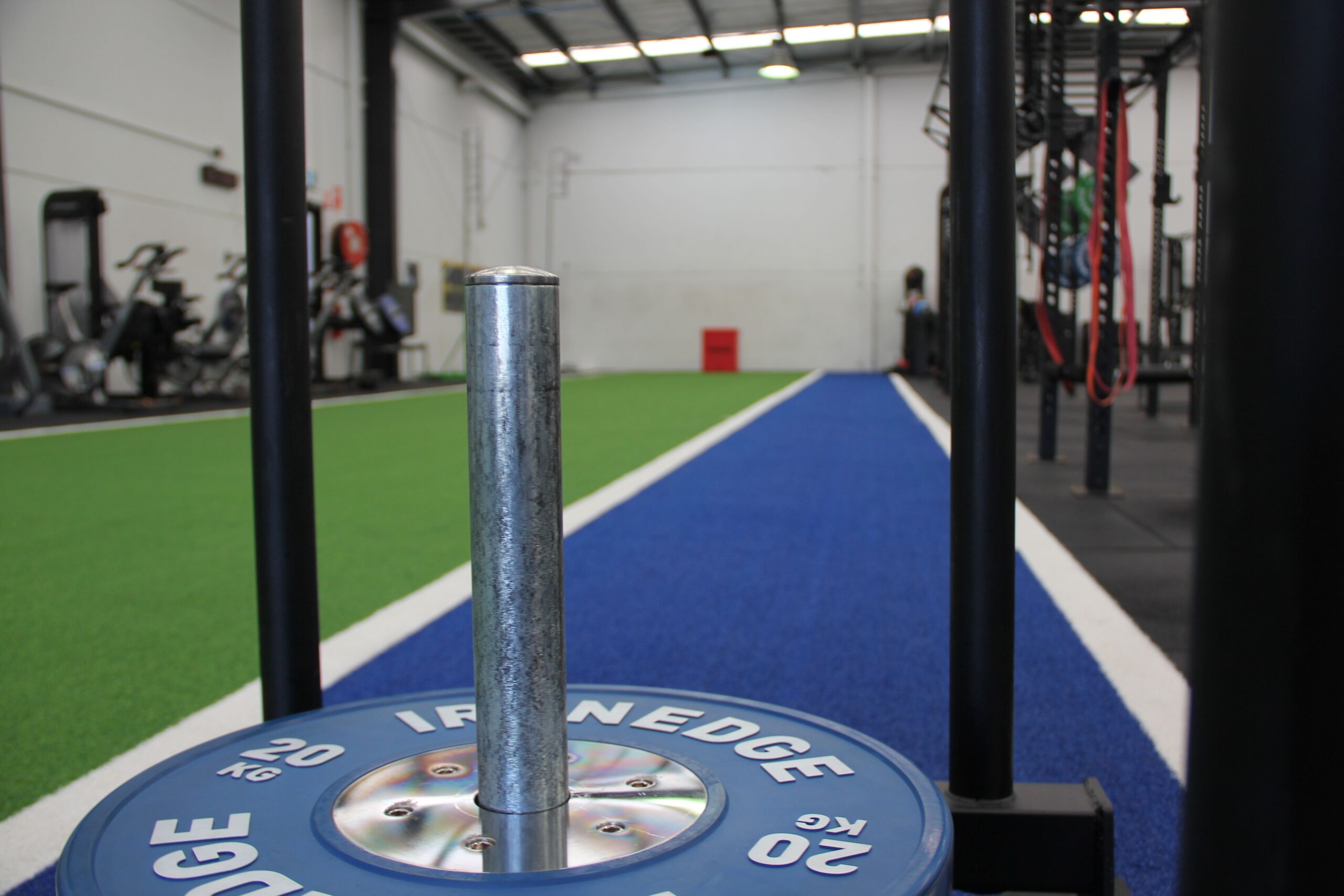
Resistance training for sport is about becoming bigger, faster, stronger, more durable and better conditioned to play their chosen sport. If an exercise in your training regime doesn’t achieve at least one of these outcomes it has no place. On the flip side, wouldn’t it be great if there was an exercise or method of lifting that achieved all of these outcomes? Assuming you’ve read the title, you know where this is going. Enter Sled Training.
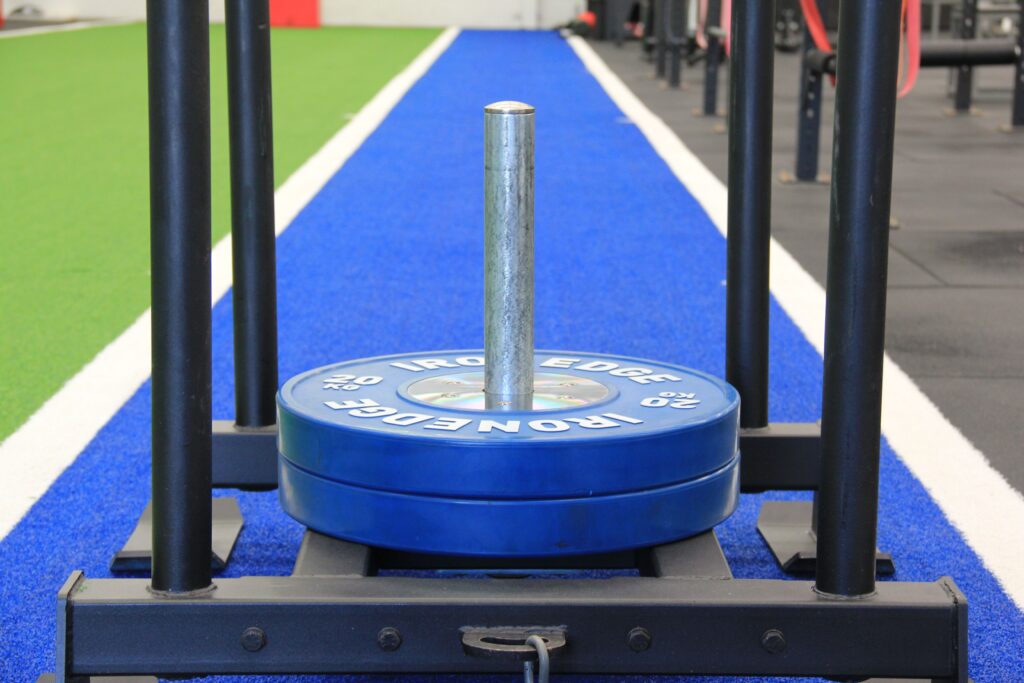
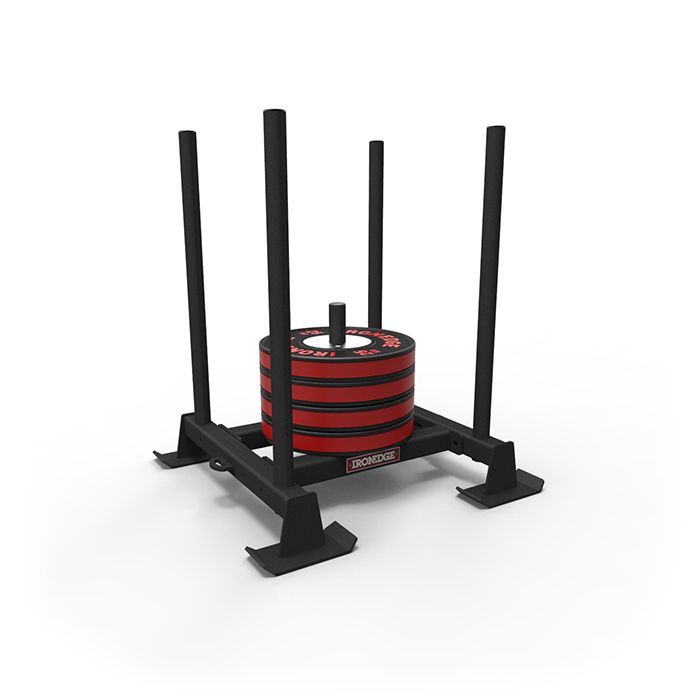
About the Hurt Terminal
Sled training can be traced back to European loggers dragging heavy trees behind them, incidentally developing their legs and backs, but began to become more popular in modern sport with Gridiron / American football players training their tackling ability. Using weighted sleds which could be tackled and pushed backwards had greater specificity to tackling, and thus greater transfer, compared to heavy squatting or power cleans.
These sleds have morphed over the years into all shapes and sizes for general use, as opposed to specifically for tackling. The result is they have become more and more popular as a conditioning tool, as well as for developing lower body strength and power.
Why is it Different?
The closest relative to sled training would be sprinting;
both being anaerobic, lower body dominant and with performance dependent on
lower body power as much as anaerobic endurance even when performed for
relatively extended durations.
To increase the intensity of sprinting, one can run hills
but it’s otherwise impractical to increase resistance (requiring the use of a
parachute, or agility band with a trailing runner), or try to sprint harder
(given it’s already at maximal intensity, easier said than done). The hurt
terminal just needs to be loaded with more weight.
Similar to cycling or swimming, sled training is concentric
only in nature. The eccentric portion of a rep is where the muscle damage
occurs that signals to the body that it must repair itself, and become stronger
to avoid further damage. This is a significant part of the training process,
but remember that damage has to be recovered from. By limiting muscle damage,
training volume can be increased without increasing the risk of injury. This is
handy for athletes looking to deload, improve body composition or reduce wear
and tear without compromising on training. The benefit of pushing a sled over
cycling or swimming is that it is more specific to running, which is more
applicable to the overwhelming majority of sports outside of swimming or
cycling.
What does the Research Say?
Alcaraz, Carlos-Vivas, Oponjuru & Martinez-Rodriguez
(2018) found that sled training improved acceleration but not maximum velocity
when sprinting; and recommended a volume of more than 160m per session with a
training frequency of 2-3 times per week to improve sprinting performance,
based off of their meta-review (an analysis of multiple studies). The weight
was found to “not be a determinant of sprint performance”. A recurring theme
with the research is that training with sleds will improve the acceleration
phase, but this improvement would lessen in significance as the duration of
running continues.
Morin et al (2017) found that an 8-week protocol of
very-heavy sled training (using 80% body mass sled load) lead to a “clearly
increased maximal horizontal-force production compared with standard unloaded
sprint training” and improved mechanical effectiveness. They also found a
moderate and small improvement in 5m and 20m sprint performance respectively.
Petrakos, Morin & Egan (2016) found in a systematic
review that lighter loads (<10% body mass sled load) lead to a slight decrease in acceleration but a moderate
increase in maximal sprint velocity; whereas moderate-very heavy (10-20% and
>30% body mass sled load) were found to provide increases in acceleration
performance ranging from trivial to extremely large (0.5-9.1% improvement) in
trained athletes.
Cross, Brughelli, Samozino, Brown & Morin (2017)
compared maximal unloaded sprints with a variety of loads ranging from 20-120%
body mass sled load, and determined the “optimal loading conditions” were
69-96% for “optimized development of horizontal power”. Remember, this is power
as opposed to speed; this is the ideal protocol to follow to improve
acceleration.
Kawamori, Newton, Hori & Nosaka (2014) compared two
groups who used loads heavy enough to reduce their sprint velocity by either
30% or 10%. They found that both groups improved their sprint performance from
0-10m, but only the heavy group improved from 0-5m (the acceleration phase).
Seitz, Mina & Haff (2017) investigated the effects of post-activation potentiation using sled training. Rugby players pushed a sled at either 75% of 125% body mass sled load, then performed a maximal sprint either 15 seconds, 4 minutes, 8 minutes or 12 minutes after. Sprint time was slower at all intervals following the 125% sled push, and 15 seconds following the 75% sled push. However, sprint performance significantly increased at the 4 minutes, 8 minute and 12 minute mark (peaking at 8 minutes).
Summary
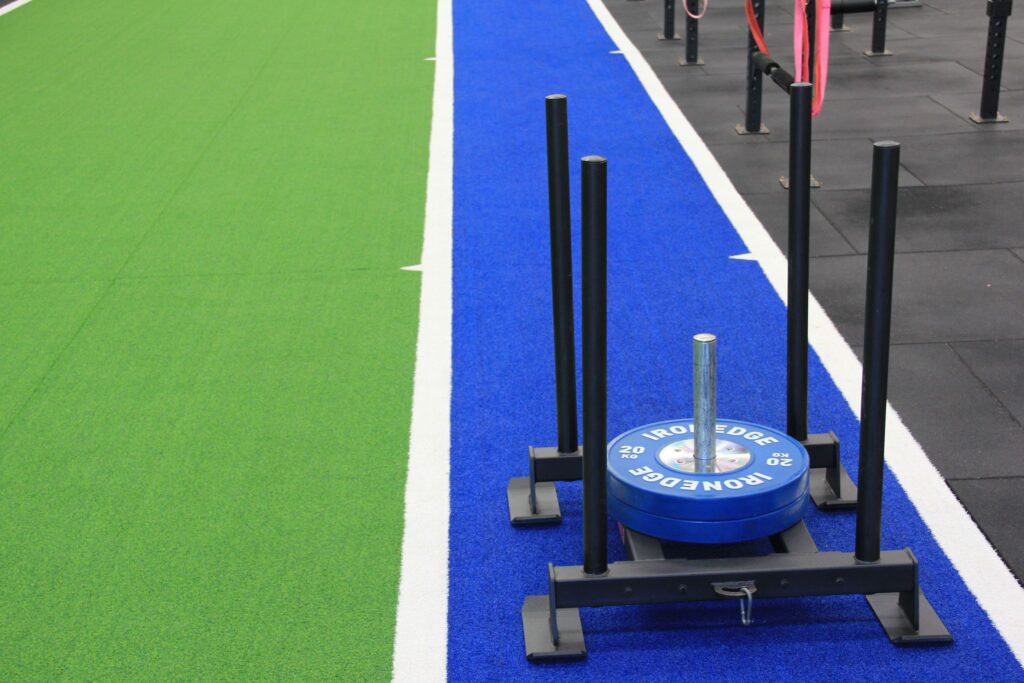
Our Hurt Terminals are proven to improve sprinting performance, in particular accelerating. They can also be used as a muscle-building alternative to traditional cardio, given the tension placed on the muscles and high loads that can be used, and are the ideal combination of being hard on muscles yet easy on joints.
References
- Alcaraz, P.E., Carlos-Vivas, J., Oponjuru, B.O., & Martinez-Rodriguez. A. (2018) The Effectiveness of Resisted Sled Training (RST) for Sprint Performance: A Systematic Review and Meta-analysis. Sports Medicine; 48(9): 2143-2165
- Morin, J.B., Petrakos. G., Jimenez-Reyes. P.,
Brown. S.R., Samozino. P., & Cross. M.R (2017) Very-heavy sled training for
improving horizontal-force output in soccer players. International Journal of Sports Physiology and Performance; 12(6):
840-844 - Petrakos, G., Morin, J.B., & Egan, B (2016).
Resisted sled sprint training to improve sprint performance: a systematic
review. Journal of Sports Medicine 46(3):
381-400 - Cross, M.R., Brughelli, M., Samozino, P., Brown,
S.R., & Morin, J.B (2017) Optimal loading for maximizing power during
sled-resisted sprinting. Internal Journal
of Sports Physiology and Performance; 12(8): 1069-1077 - Kawamori, N., Newton, R.U., Hori, N., &
Nosaka, K. (2014). Effects of weighted sled towing with heavy versus light load
on sprint acceleration ability. Journal
of Strength and Conditioning Research; 28(10):2738-45. - Setiz, L.B., Mina, M.A., & Haff, G.G.
(2017). A sled push stimulus potentiates subsequent 20-m sprint performance. Journal of Science and Medicine in Sport; 20(8):
781-5