
Place your promotion here
How To Make The Box Jump More Effective.
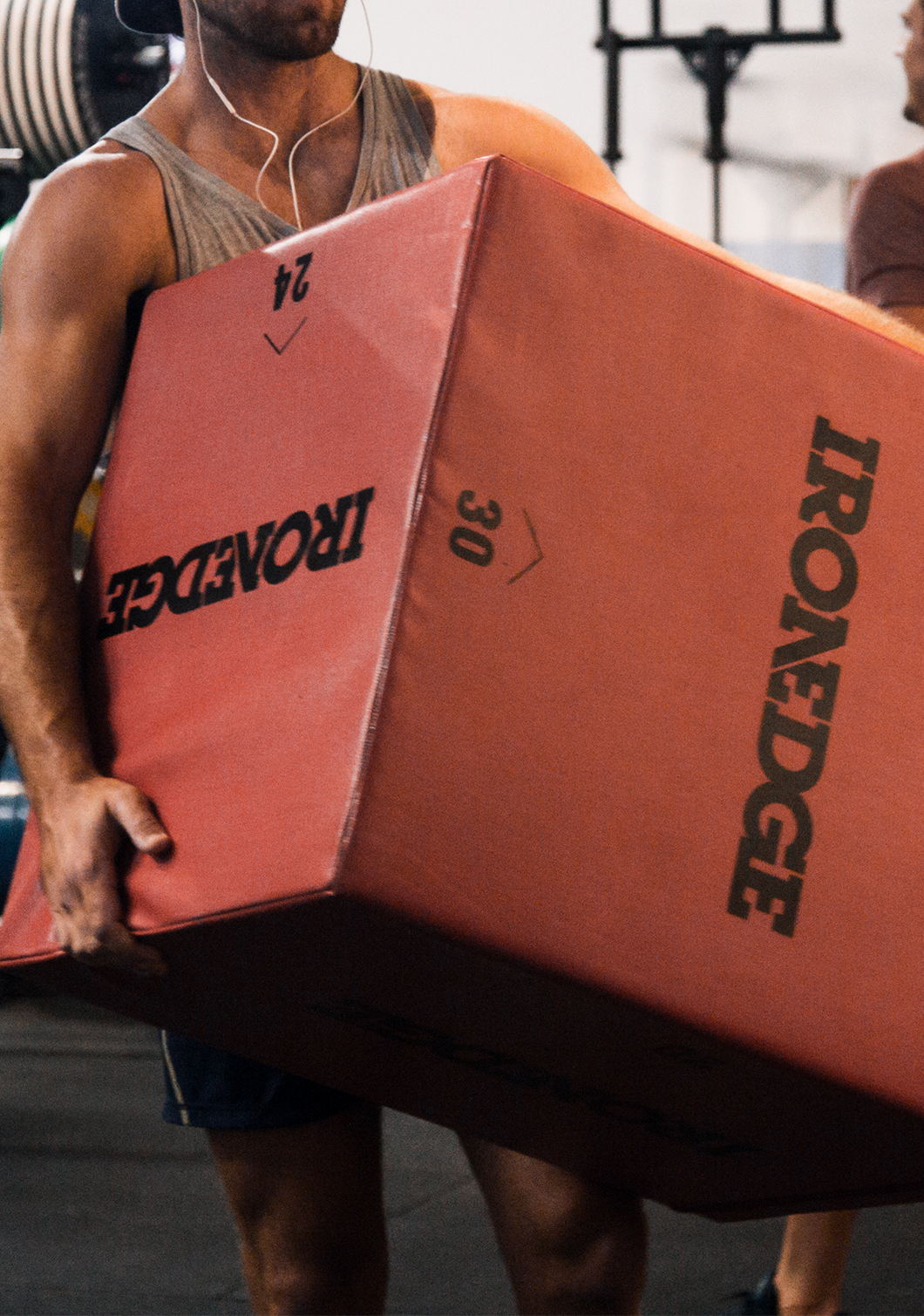
Box jumps are a staple for many coaches in the strength and conditioning world. They are excellent for training concentric power and vertical jump height, with the benefit of significantly reducing landing forces. Decreased landing and eccentric forces are important during the season as excessive volumes of eccentric muscle actions can cause undesirable fatigue. The goal is to minimise that fatigue to optimise performance in the chosen sport.
Box jumps are often executed poorly, the main reason is the selection of plyometric box height. Although using a near maximal height for box jumps might look impressive, there is no difference in force and power metrics when compared to a lower box height (Koefoed et al, 2020). More specifically, there is no difference in peak force, peak power, centre of mass (COM) displacement, peak rate of force development and concentric time to take-off (Koefoed et al, 2020).
Pros and Cons - high box jump
There are some positives to a high box, such as:
- Maximizing the intent of the jump.
- Creating competition between athletes.
- Providing a physical challenge to overcome.
Unfortunately the negatives outweigh the positives. Some undesirable aspects include:
- Altered jumping mechanics/technique.
- Excessive hip flexion (knee tucking) to clear the box.
- No increase in COM displacement.
- There is a point where jump height and vertical power are not increasing alongside Plyometric box height. Instead, hip mobility becomes more influential to the success of a high box jump.
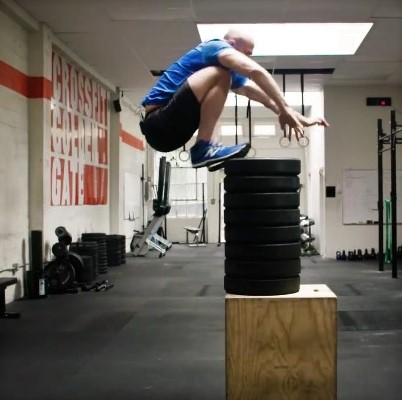
Reducing the height of the Plyometric box to something more suitable significantly improves effectiveness and efficiency of the box jump. I combine this with the instruction of a taller landing position for the following reasons:
- Minimises excessive hip flexion and knee tucking.
- Makes the displacement of the COM much easier to determine.
- If box height remains the same and the athlete is able to land in a taller position, this is a good indication of an increased displacement of the COM (i.e. a higher jump and increased power).
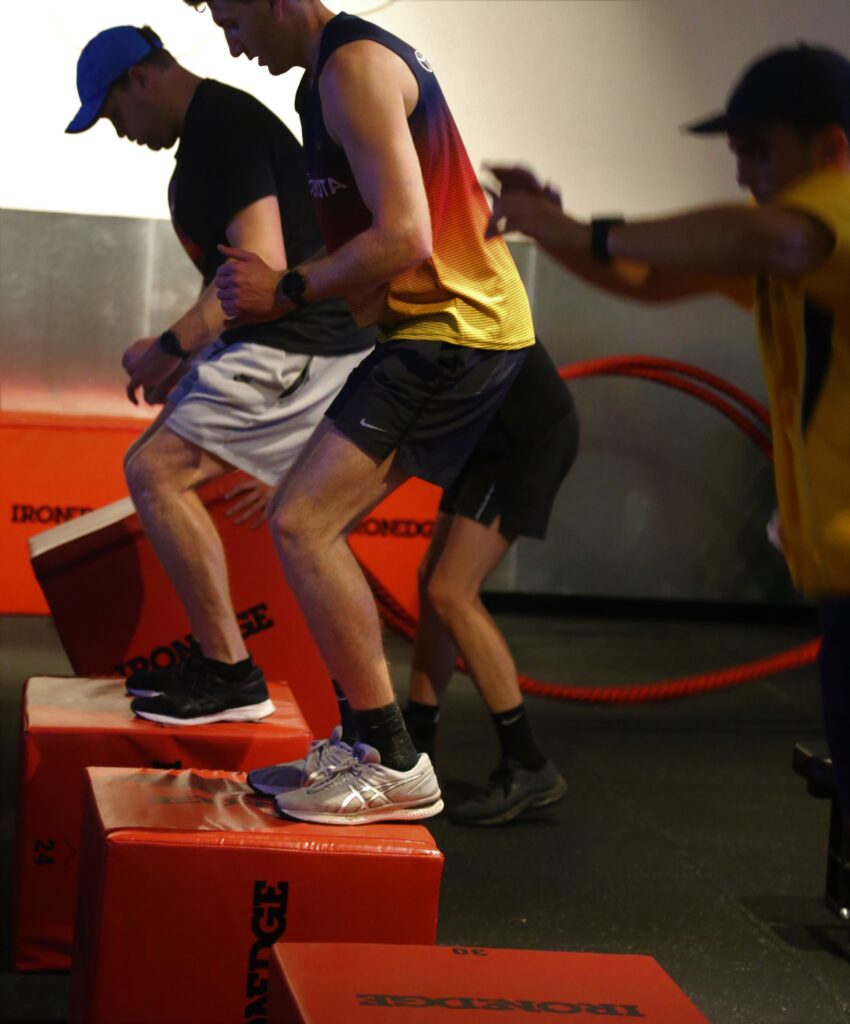
So the next time you’re implementing box jumps, remember the purpose and the goal of the exercise. How you execute the exercise will determine the stimulus, and therefore, the adaptation you are after. At the end of the day, context is king. If the session is about competitiveness and intent with each exercise, then using the highest possible box might be a good idea. For the most part, an appropriately sized box is safer, requires less hip mobility/technique, and is more effective and efficient at improving vertical power when executed with the correct focus.
REFERENCES
Koefoed, N., Dam, S., & Kersting, U. G. (2020). Effect of Box Height on Box Jump Performance in Elite Female Handball Players. Journal of strength and conditioning res.